A new approach to learning
At CODE, we rethink how higher education works in today’s tech world. Our approach leaves outdated conventions behind and shows that a new way is possible.

How it works
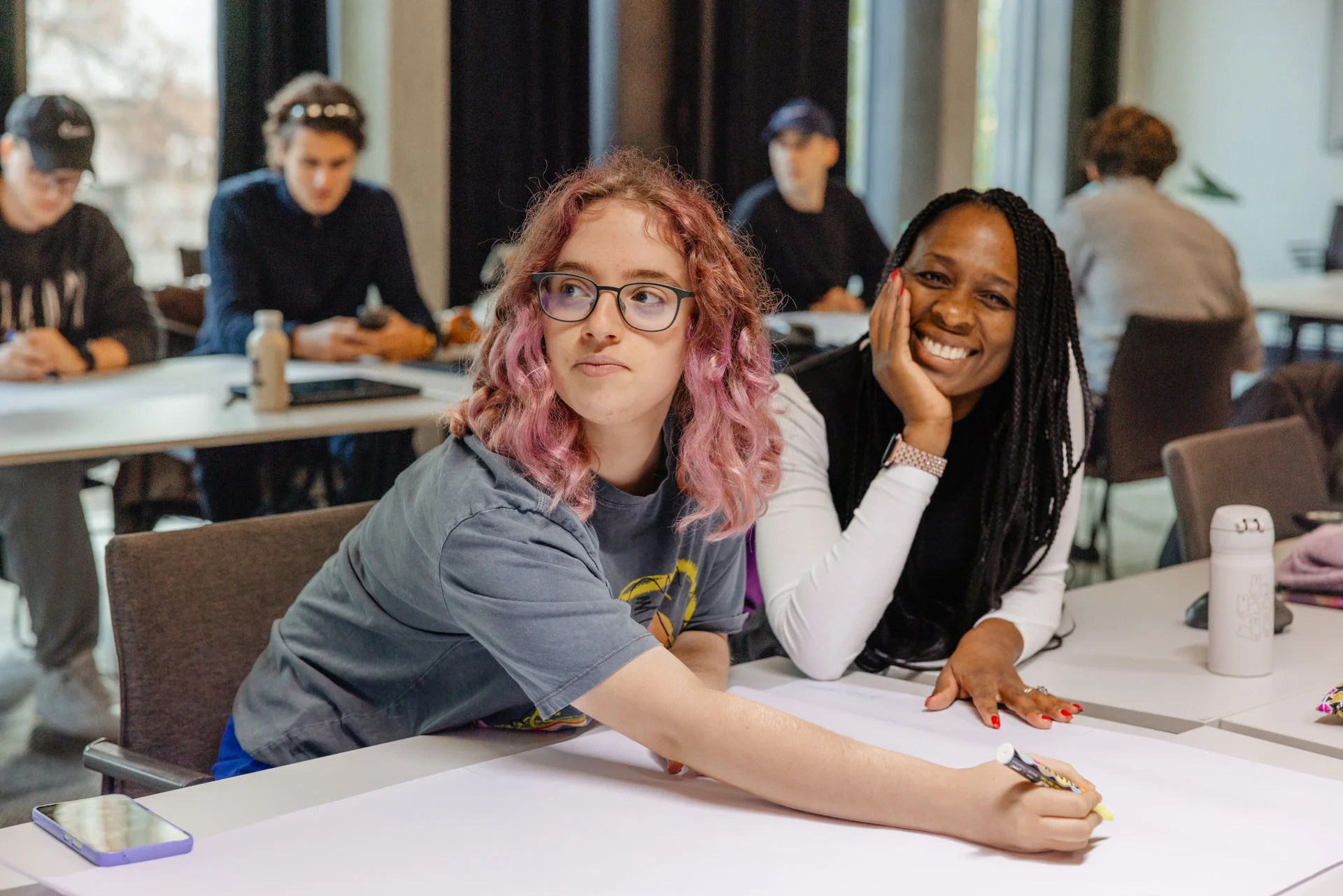
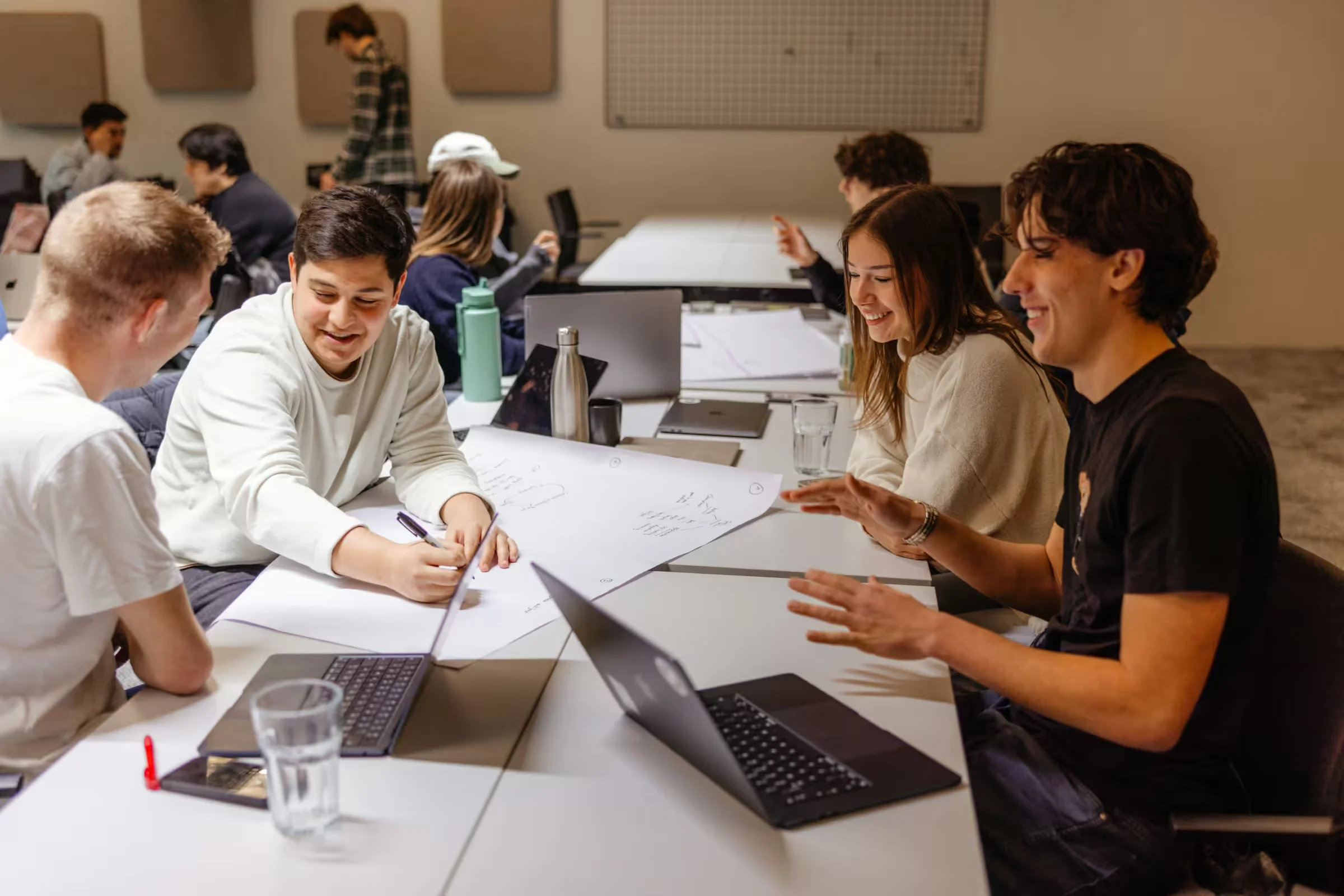
We move beyond traditional pen-and-paper exams and lecture halls. Our approach focuses on project-based, hands-on learning that encourages exploration and creativity. Students take charge of their education, work on real-world challenges, and collaborate across disciplinary boundaries. This builds curiosity and a deeper understanding, and it prepares you for the changing demands of the tech industry.

Curiosity-driven education
With ChatGPT, Google, and Stack Overflow just a click away, long theoretical lectures have become outdated. Instead of repeating what’s already accessible, we teach our students to use these resources well and create real value in their projects.

Project-based learning
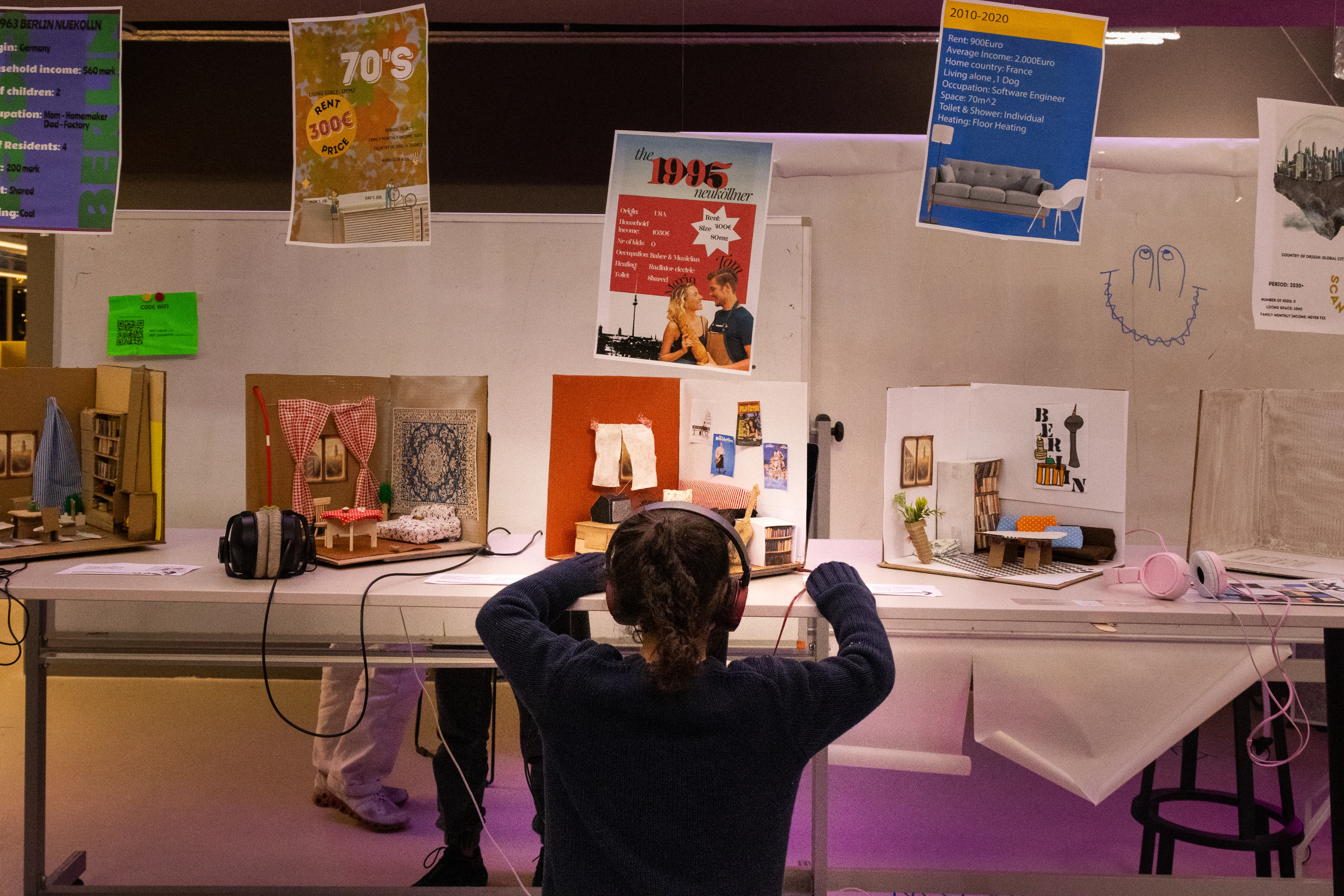
At the beginning of each core semester, students, faculty, and partners pitch diverse project ideas, ranging from deep tech and software development to creative design and user experience research. Students follow their curiosity and choose a project that’s right for them, where they apply their knowledge and learn in a way that lasts.

Interdisciplinary teams
After the pitch phase, students form interdisciplinary teams across all three study programs. Software engineers, designers, and entrepreneurs work together as they would in the “real world,” because developing digital products takes all three disciplines.

Professors as mentors
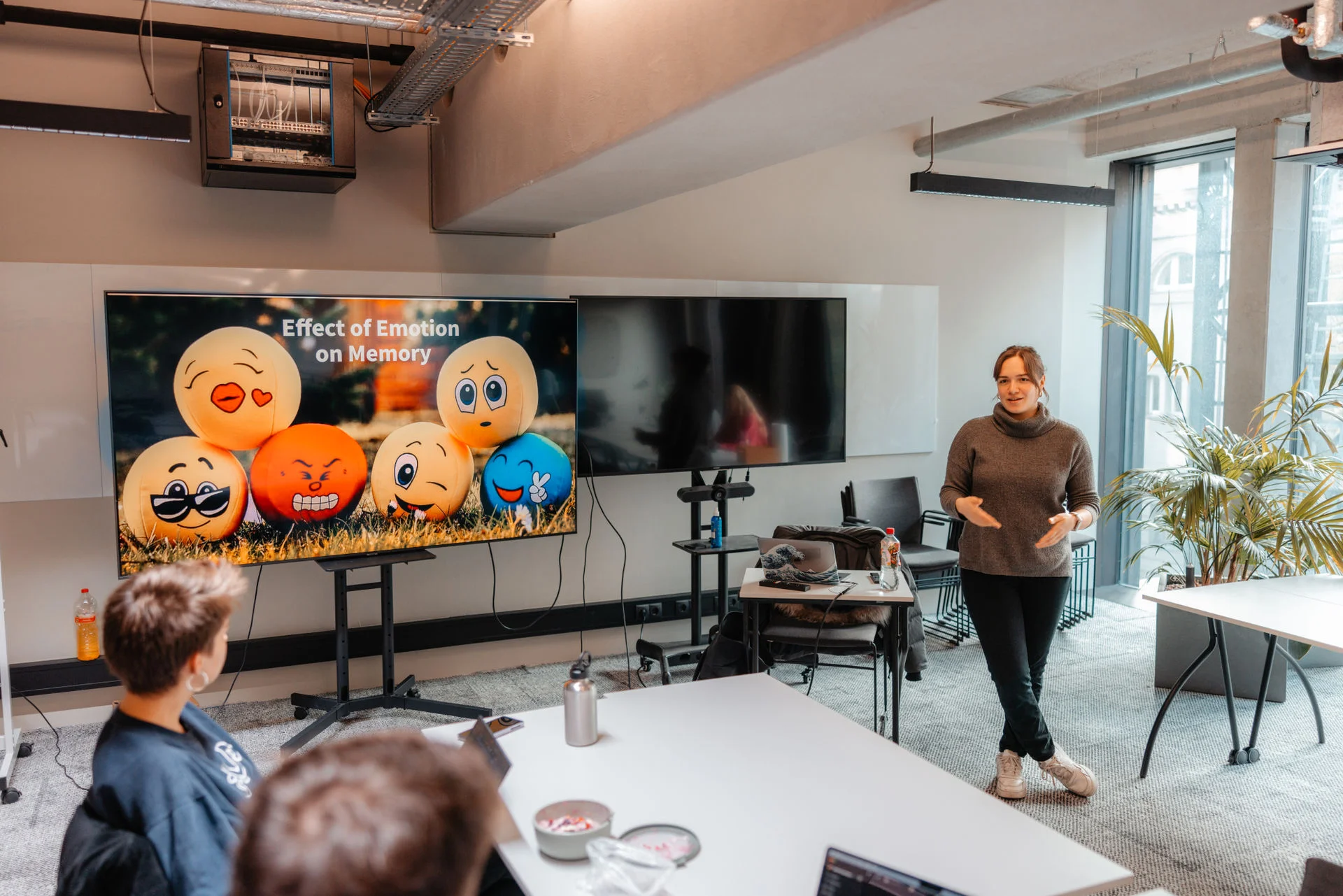
Holding lectures is a practice from the Middle Ages (literally!). So, don’t expect traditional lecture halls on our campus. At CODE, our professors are mentors. Instead of teaching theory, they guide group sessions, encourage discussion, and help students apply what they learn. Their role is to inspire creativity, support problem-solving, and step in with learning units when needed.
The way kids learn to make good decisions is by making decisions, not by following directions.
Semester overview
A Bachelor’s degree at CODE typically takes three years (six semesters) and is broken down into three types of semesters: Orientation, Core, and Synthesis. The study programs and curricula are designed to accelerate your learning and maximize your curiosity.

Orientation semester
The first semester for every CODE student, where you get practical experience in all three disciplines, with professor guidance and project-based assignments.

Select your program
After the orientation semester, you choose a study program, which determines which modules are mandatory for you. If you change your mind, you can still switch programs later in your studies.

Core semesters
This is where you will spend the majority of your time, building projects, joining Learning Units, and doing assessments. You decide which modules you want to take when and how to align them with your project work.

Synthesis semester
The final semester of your studies at CODE, where you bring everything you’ve learned together in a Capstone Project and your Bachelor’s thesis.
Science, Technology and Society: Asking the big questions
We believe that all students should think about the social impact of their work, taking into account the political forces of today, in order to become responsible digital pioneers.
That’s where STS comes in: our Science, Technology and Society program offers students a comprehensive overview of the world, with roots in philosophy, psychology, literature, economics, law, and science.
Ask the big questions. Take time to find answers. Do something wonderful with all the cultural expressions, new and old, that enrich our world.
It all started with curiosity
Let’s take a trip down memory lane to 2017, when our co-founder Manuel Dolderer gave a TEDx talk on the idea of curiosity-driven education and the birth of CODE.
An ounce of practice is worth more than tons of preaching.
Frequently asked questions
We get it. Our learning concept is a bit different. Here are some of the questions we get asked often.
Want to learn more?
We recommend exploring these pages to learn about the experience of studying at CODE.