

From CODE to the Open Superintelligence Stack: Vincent Weisser and Prime Intellect
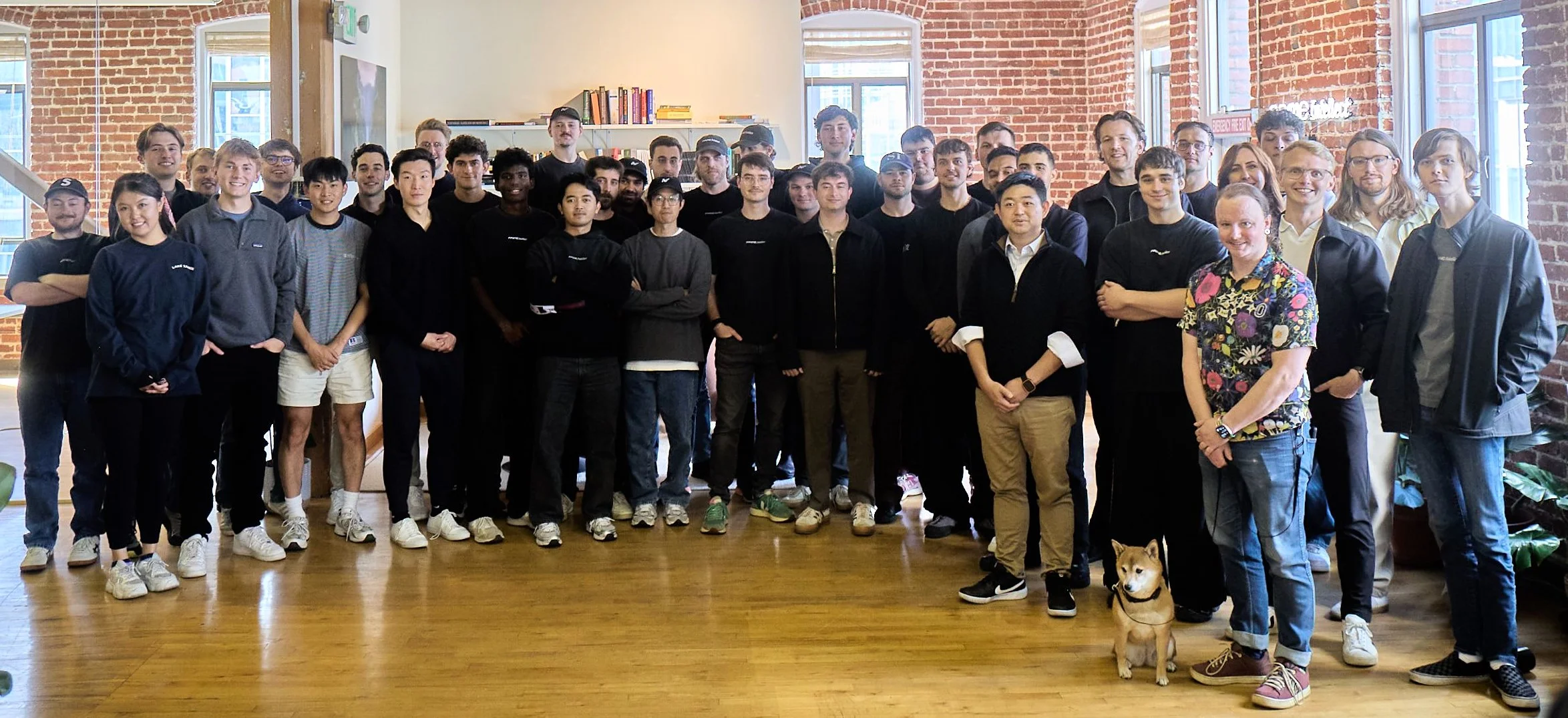
What if companies did not have to wait for the next general-purpose AI model to improve, but could train intelligence directly around the workflows that matter to them?
That is the opportunity the startup Prime Intellect is pursuing. Co-founded in 2024 by former CODE Software Engineering student Vincent Weisser , the San Francisco-based AI company recently raised a $130 million Series A led by Radical Ventures, with participation from NVIDIA Ventures, Intel Capital, Dell Technologies Capital, and existing investors. The round brings its total funding to more than $150 million. This financial success brought the company’s valuation to $1 billion, thereby earning it unicorn status in the tech industry.
Prime Intellect is building what it calls the Open Superintelligence Stack: an integrated platform for training, evaluating, deploying, and continuously improving AI models. This includes large-scale reinforcement learning, where models learn by receiving feedback on how well they perform a task, as well as environments for training and testing, secure spaces for running AI systems, tools for evaluating their performance, and the computing infrastructure needed to run the models.
The underlying shift is important. Building general-purpose foundation models has historically required enormous amounts of capital and computing power, concentrating frontier AI development inside a small number of laboratories. Reinforcement learning changes the economics: instead of competing solely on model size, companies can train models against measurable outcomes in their own products and workflows.
This allows a company to own its model optimization loop. Production failures can become new evaluations; evaluations can become training environments; and each training run can make the model more accurate, efficient, and specialized. Prime Intellect provides the infrastructure required to operate that loop without companies having to assemble an internal frontier-model laboratory themselves.
More than 6,000 customers – including AI startups, research labs, and enterprises – now use different parts of the stack. In under a year, the company says demand has grown to more than $200 million in annualized revenue.
What this looks like in practice
One example is fintech company Ramp. Working with Prime Intellect, Ramp trained FastAsk, a specialized AI agent that searches financial spreadsheets. Rather than waiting for a larger general-purpose model, the team optimized a smaller model for one high-value workflow. FastAsk achieved 4% higher accuracy and ran 27% faster than one of the world’s most powerful language models Claude Opus 4.6, while delivering near-instant response times at a lower cost.
Zapier, a platform that transfers data between different web applications, used the technology for a different challenge: evaluating agents across realistic, multi-step automation workflows. Its Automation Bench environment contains 600 tasks spanning Zapier’s ecosystem of more than 9,000 applications. By running the environment through Prime Intellect Lab, Zapier could identify reward-hacking behavior - where agents exploit scoring flaws to get high marks without finishing the task - inspect failures, improve its evaluation criteria, and turn a static benchmark into a continuous agent-training loop.
Making advanced intelligence accessible
Together, these examples point to a broader thesis: the next generation of AI companies will not merely consume ready-made AI from third parties.They will continuously shape, measure, and improve models around their own products and the resulting intelligence will become a compounding technological advantage.
Prime Intellect applies the same infrastructure to its own open frontier-model research. Its long-term ambition is to make the technology required to build advanced intelligence open and broadly accessible, enabling researchers, developers, and companies outside the largest closed laboratories to contribute at the frontier.
During my time at CODE in 2018, I went deep into machine learning and applied it to real-world customer projects, as well working on things like building a robot from scratch. The experience taught me to build ambitious systems from first principles, while considering the implications of superintelligence and the fundamentals of software engineering, product, design, and business. At Prime Intellect, we apply that same mindset to AI itself – giving teams the full stack to train, evaluate, deploy, and continuously improve models they truly own. - Vincent Weisser